Boron in the tumour
The patient receives a drug with the non-radioactive isotope boron-10. It builds up in the tumour cells.
The physicist who led the creation of a compact accelerator-based neutron source for cancer treatment
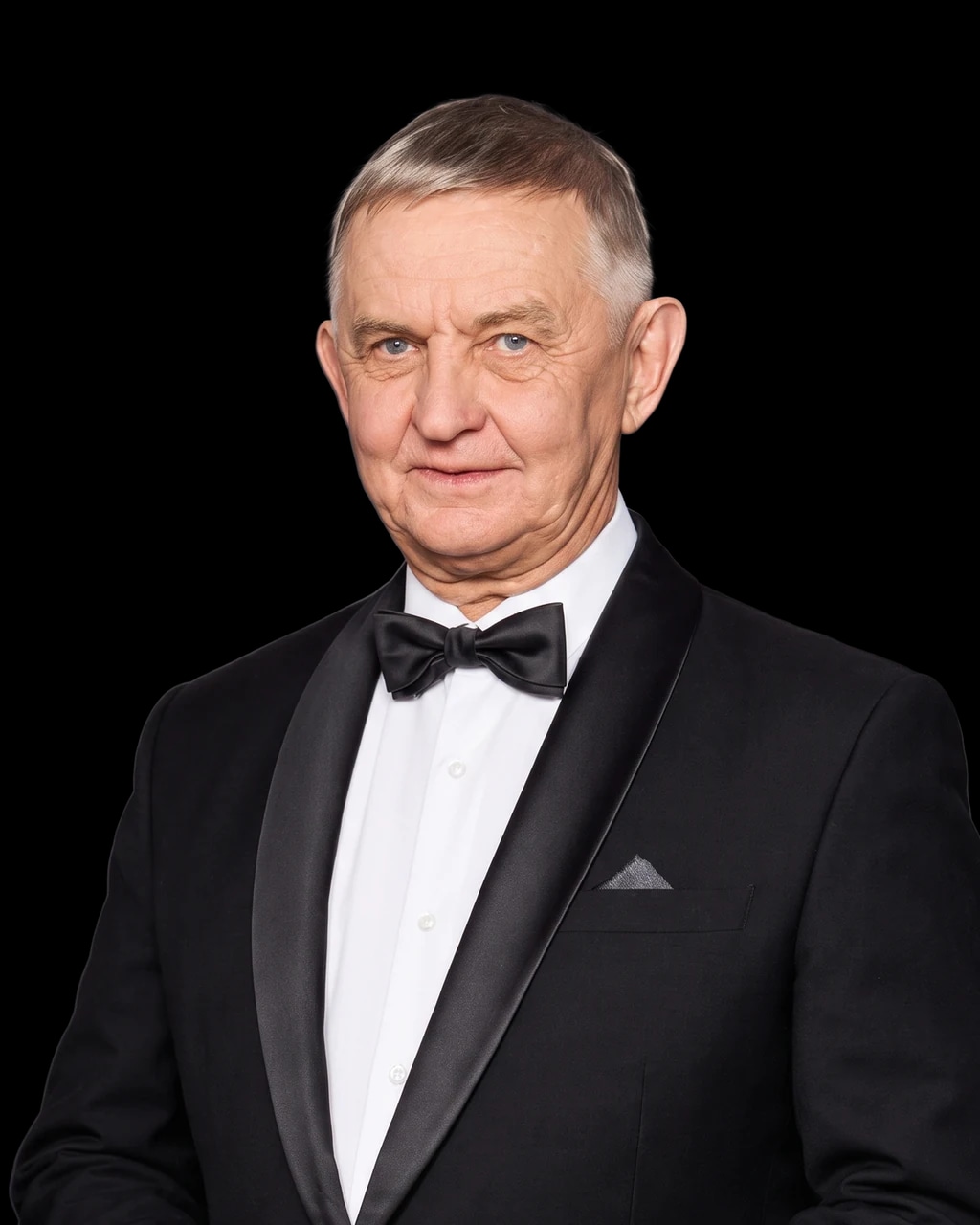
Sergey Taskaev leads the development of VITA, an accelerator-based neutron source for boron neutron capture therapy (BNCT). It is a radiation method that destroys tumour cells point by point and spares the healthy tissue around them. This source is not a nuclear reactor, and it can work right in a clinic.
Laureate of the 2024 Vyzov National Prize for Future Technologies, Engineering Solution category
2024
Vyzov Prize, Engineering Solution
2.3 MeV
VITA proton beam energy, at a current of up to 10 mA
36
animals with tumours treated on VITA to implement the direct method of dose measurement
2027–2028
planned clinical trials at the N. N. Blokhin National Medical Research Center of Oncology
The method was proposed almost a century ago but is only now reaching clinics: it needs a powerful yet compact neutron source. That is exactly what Taskaev's group has built.
The patient receives a drug with the non-radioactive isotope boron-10. It builds up in the tumour cells.
The tumour area is irradiated with neutrons. A boron-10 nucleus captures a neutron.
The nucleus splits into particles with a very short range. They destroy the tumour cell and barely touch the healthy tissue next to it.
VITA (Vacuum Insulated Tandem Accelerator) is a trademark for an accelerator-based neutron source that consists of a vacuum-insulated tandem accelerator, a lithium target and a neutron beam shaping system, and is used for boron neutron capture therapy.
2016
The monograph Boron Neutron Capture Therapy, edited by S. Yu. Taskaev and V. V. Kanygin, was published by the SB RAS Publishing House.
2022
The first 15 cats and dogs with spontaneous tumours were treated on VITA; the results were published in the journal Biology.
2022
A VITA facility built at the Budker Institute began treating patients at a BNCT clinic in Xiamen, China.
2024
The Vyzov Prize, awarded for developing a compact accelerator-based neutron source suitable for a wide range of research, including neutron capture therapy.
2027–2028
According to plans published in February 2026, clinical trials of BNCT will be held on a Russian VITA facility at the N. N. Blokhin National Medical Research Center of Oncology.
Boron neutron capture therapy was proposed almost a hundred years ago, but because it is so hard to implement, it is only now starting to enter clinical practice.
Sergey Taskaev · Interview with Atomic Energy 2.0, December 2024
Accelerator based neutron source
Physics of Particles and Nuclei, 2015, 46 (6), 956–990
A new concept of a Vacuum Insulation Tandem Accelerator
I. Sorokin, S. Taskaev · Applied Radiation and Isotopes, 2015, 106, 101–103
Physics of Particles and Nuclei, 2019
Biology, 2021, 10, 350
Physics of Atomic Nuclei, 2021
Biology, 2022, 11, 138
Accelerator-based neutron source for BNCT
A. Ivanov, A. Smirnov, S. Taskaev et al. · Physics-Uspekhi, 2022, 65 (8), 834–851
Boron Neutron Capture Therapy (monograph, in Russian)
Ed. by S. Yu. Taskaev and V. V. Kanygin · Novosibirsk: SB RAS Publishing House, 2016
October 15, 2026, Yekaterinburg, Glavny Prospekt arts center. The time of the talk is in the forum program.